

Disaster in Népal
NEWSLETTER #06 – SEPTEMBER 2026
Our Foundation is mobilizing for the families affected by the disaster in Nepal
Newsletter #06 – September 2026
What happened
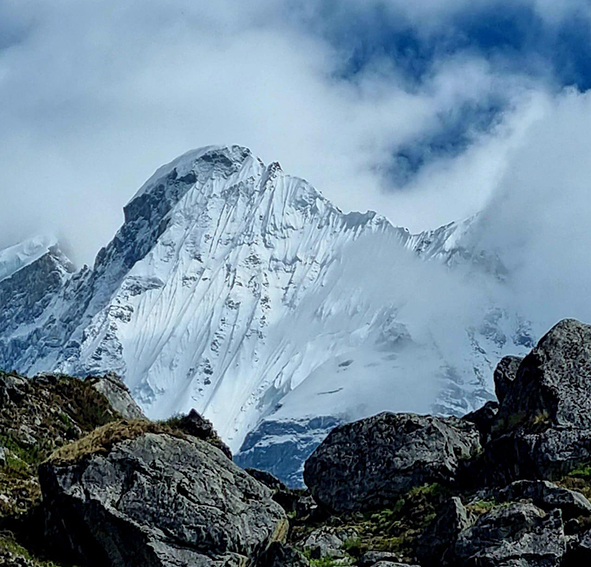
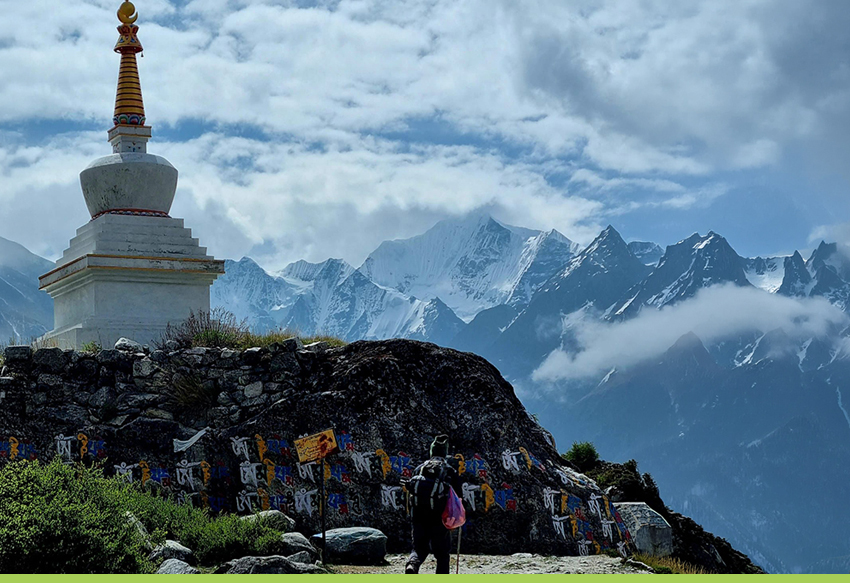
On Wednesday, August 26, 2026, in the early morning, a section of the Langtang Lirung glacier broke off in the Himalayas, at the border between Nepal and Tibet. This collapse triggered an avalanche of ice and rock, followed by a gigantic mud and water flow that rushed down the valley for nearly 100 kilometers, along the Bhote Koshi and then Trishuli rivers. In some places, the water level rose by several meters in just half an hour.
The flood hit the districts of Rasuwa, Nuwakot, Dhading, Gorkha, Tanahun and Chitwan, sweeping away entire villages, roads, bridges, hydroelectric power stations and health centers. The toll, still provisional, is already heavy: several hundred confirmed deaths on the Nepalese side, thousands missing, and around 93,000 people affected.
The area most severely affected is slightly north of the Kathmandu Valley, where we usually operate. But the disaster affects us directly: several relatives of the partners we work with on a daily basis are among the victims.
Why Nepal is so vulnerable to this type of event
This tragedy is not an isolated accident. It illustrates a reality that scientists have been observing for several years: climate change is accelerating the thawing of permafrost and the destabilization of the Himalayan glaciers, making this type of collapseincreasingly likely. Several researchers who studied the event emphasize that a « critical threshold » seems to have already beenreached in certain mountain areas, where simply living there has become risky.
In addition to this geological and climatic risk, there is a structural vulnerability: the geography of Nepal, a country of deep valleys and villages often accessible only by mountain roads, considerably complicates the delivery of aid as soon as bridges and roads are swept away. The country’s poverty also limits means of prevention, resilient construction, and rapid response,leaving the most isolated communities particularly exposed and the last to receive aid.
This disaster illustrates a glaring climate injustice: Nepal is responsible for only about 0.01% of global greenhouse gas emissions, yet finds itself on the front lines of their most violent consequences.
Our commitment
The Nepalese government and major international organizations are already fully mobilized for immediate relief in the affected areas. Given the scale of the disaster (approximately 93,000 people affected), we have chosen to focus our efforts where we can provide real added value: among the displaced persons who are converging toward the Kathmandu Valley, the capital and the nearest inhabited area to the affected regions.
Our emergency aid program is based on systems that we are very familiar with and that we already operate on a daily basis :
Local assistance, as close as possible to the arrival of the displaced
Rather than trying to intervene directly in the disaster-stricken areas, which are difficult to access and already covered by majorhumanitarian actors, we choose to welcome people where they arrive: in the Kathmandu Valley. This approach allows us to quickly mobilize our existing structures and offer concrete, long-term assistance to families who will often have to rebuild their lives far from their original village.
The exact locations of the reception centers (schools, our clinic’s branch) will be confirmed with our local partners in the coming days, based on the observed flow of displaced persons on the ground
We need you
The speed and scale of this disaster far exceed our usual means. The Maïa Baudelaire Foundation has decided to send fundsdirectly to the site to help the victims and finance this emergency program, including shelters, food, care, and clothing for thedisplaced families.
So that this aid can be sent quickly and in line with the needs, we need all the generosity. Every donation, regardless of itsamount, counts and will be directly mobilized to help the victims. You can also share this campaign with your network or put usin touch with partners who might be able to support us.
We will keep you informed of the progress of this program in future communications.
We remind you that a donation to the Maïa Baudelaire Foundation is tax-deductible up to 66%: a donation of €100 ultimately costs you only €34 after tax reduction.
Thank you for your solidarity.
With all our friendship,
The team Maïa Baudelaire foundation

NEWSLETTER #06 – SEPTEMBER 2026

NEWSLETTER #05 – June 2026
NEWSLETTER #04 – OCTOBER 2025
NEWSLETTER #03 – MAY 2025
NEWSLETTER #02 – March 2025
Newsletter #01 – January 2025